Hetao Frontier | Comentropy: Paving the Path of Standardization for Global Collaboration and Future Innovation
2026-02-03
Comentropy: Paving the Path of Standardization for Global Collaboration and Future Innovation
Luis Jorge Romero
编者按:我们非常荣幸邀请卢易思(Luis Jorge Romero)先生为本期撰稿。他现任共熵产业与标准创新服务中心(Comentropy)首席战略官,曾担任欧洲电信标准协会(ETSI)总干事,并在西班牙电信集团担任多项管理职务。作为一位拥有超过25年电信行业管理经验的资深专家,卢易思先生在标准化领域有深刻的理解和丰富的实践经验,是全球标准化领域的权威之一。
在文章中,卢易思先生深入剖析了标准化在推动全球科技创新与产业发展的关键作用,并结合自身经验对中国标准化战略和实践给予了高度评价。他特别聚焦于河套国际产业与标准组织聚集区的优秀实践,分析六大标准化联盟及共熵产业与标准创新服务中心在国际标准化体系中的核心定位与贡献。
希望这篇文章能为您带来启发,展现标准化如何赋能科技创新、推动产业协作,并助力全球高质量发展。同时,我们期待您的关注与参与!如有意向投稿或合作,请随时联系我们。
Editor’s Note:
We are honored to invite Mr. Luis Jorge Romero to contribute to this issue. Currently serving as the Chief Strategy Officer of the Comentropy Industry and Standards Innovation Service Center, Mr. Romero previously held the position of Director General at the European Telecommunications Standards Institute (ETSI) and served in several management roles at Telefónica Group. With over 25 years of experience in the telecommunications sector, Mr. Romero is a seasoned expert with profound insights and extensive practical experience in the field of standardization, making him a globally recognized authority in this domain.
In this article, Mr. Romero delves into the critical role of standardization in driving global technological innovation and industrial development. Drawing from his expertise, he provides a deep analysis of China’s standardization strategies and highlights the outstanding practices of the Hetao International Organization Headquarters. He also explores the pivotal role of the six standardization alliances and the Comentropy Industry and Standards Innovation Service Center within the international standardization ecosystem.
We hope this article inspires you by demonstrating how standardization empowers technological innovation, fosters industrial collaboration, and facilitates global high-quality development. We also look forward to your continued engagement! If you are interested in contributing or collaborating, please feel free to contact us.
PART.01
Introduction
This article intends to explain in a few words the what, why and how of Comentropy. It is necessary to start by setting the context and therefore focus on standardization, as Comentropy’s activity mostly centres around this domain. So, there will be a short introduction to standardization, to continue by briefly highlighting the relevance that China has put in standardization and the very special role that the Hetao Shenzhen-Hong Kong Science and Technology Innovation Cooperation Zone (hereinafter referred to as the Hetao Cooperation Zone) plays. Then, the time will come to try and write a bit about Comentropy.
PART.02
Starting the Story With Standardization
Sticking to a formal definition, the International Organization of Standardization (ISO) and the International Electrotechnical Commission (IEC) define standardization as “the activity of establishing common and reusable terms to address current or potential problems in order to obtain the best solution within a given scope and promote common benefits, through the preparation, publication and application of documents.” These documents are the so-called “standards”.
Maybe invisible to many, standards nevertheless affect everyday life, as many technologies, products, and services are based on established standards. From smartphone browsing to switching on a lamp. Standards benefit sustainable innovation and the economy as a whole. But there will also be risks associated with those.
Standards benefit the economy by incentivizing investments, as standards ensure the stability of the technology over a reasonable time and enable economies of scale by fostering interoperability. Furthermore, standards facilitate trade, thanks to common approaches among countries, encouraging broader and fairer competition.
Beyond their evident positive impacts in removing barriers to international trade, standards can also increase collaboration opportunities among the companies. Standards do also benefit the environment and safety by defining requirements, which become widespread in the industry and may as well be referenced by normative regulations.
Despite some potential side effects, like maybe slowing down time-to-market or the difficulties to incorporate into its somewhat rigid process, it nevertheless seems that standardization brings big advantages to the industry and therefore, it looks like mastering its intricacies and processes is a fundamental step into mastering industry’s future. This is something that seems to have been particularly well understood and assumed in China.
PART.03
China’s Approach to Standardization
In 2021 China set out and announced its standardization policies towards 2035 through the National Standardization Development Outline. This followed a research project which started in 2018 with the aim to upgrade the strategic positioning of standardization activities and whose main recommendations saw the light in 2020. It all led to the incorporation of a China Development Plan and an action plan, formulated in line with the 14th Five Year Plan.
The Outline is counted as one of the long-term policies. The formulation of the Standardization Development Outline required collaboration and coordination among a wide range of government agencies.
The Outline defines the objectives and missions of China’s standardization development for 2025-2035 from various perspectives such as short-term and long-term, qualitative and quantitative, and domestic and international.
Chinese economy has been undergoing a transformation to high quality growth, which is supported by advanced standards. The Outline is therefore regarded as a guideline for quality development of various industries and is said to show a fundamental guiding effect from a realistic leadership towards promoting and succeeding in domestic and international trade and facilitating a sustainable and high-quality socio-economic development.
Two concepts can be identified as the distinct features throughout the Outline:
- “expansion of roles”, in that the Outline recognizes wider roles for standards, as standardization plays a fundamental and leading role not only in industry and trade but also in contributing to the improvement of the country’s comprehensive competitiveness, high-quality economic and social development, and building a new national development pattern and “openness” that allows for active market participation and competition.
- “openness”, allowing for active market participation and competition, seeking to shift away from the conventional ‘government-led’ standards development and move to standards development based on cooperation between government and market, including foreign companies and emphasizing the importance of association standards formulated by private associations to meet market needs.
PART.04
The Hetao Cooperation Zone
All of the above is totally aligned with the development plans for the Hetao Shenzhen-Hong Kong Science and Technology Innovation Cooperation Zone (hereinafter referred to as the Hetao Cooperation Zone) (Fig. 1). The Development Plan for the Shenzhen Park of the Hetao Shenzhen-Hong Kong Science and Technology Innovation Cooperation Zone (hereinafter referred to as the Hetao Plan) was officially issued in 2023, granting the Hetao Cooperation Zone three development orientations: pilot area for deepening tech innovation cooperation between Shenzhen and Hong Kong, experimental zone for adopting advanced international technical innovation regulations, and aggregation zone for trial transformation within the Guangdong-Hong Kong-Macao Greater Bay Area. The Hetao Plan clearly stipulates the need to advance the construction of the Shenzhen Park of the Hetao Cooperation Zone with high quality, high standards, and high levels.

Fig. 1 Hetao Shenzhen-Hong Kong Science and Technology Innovation Cooperation Zone
The Hetao Cooperation Zone boasts a prominent location advantage, with two land border crossings, Futian Port and Huanggang Port, connecting Shenzhen and Hong Kong, plus the so-called No#1 channel. It forms a “30-minute scientific research circle” with innovation hubs like Guangming Science City in Shenzhen and the Hong Kong Science Park as well as a “one-hour industrial circle” with cities like Guangzhou, Dongguan, and Huizhou. With a strong economic foundation and vibrant technological innovation, it possesses unique conditions for connecting to international tech innovation networks, engaging in international tech cooperation, and aligning with international standards, making it a distinctive platform in the Guangdong-Hong Kong-Macao Greater Bay Area with a focus on tech innovation.
The Hetao Cooperation Zone continues to emphasize the dual driving forces of technological innovation and institutional innovation, aiming to establish itself as a crucial hub of international science and technology innovation within the Guangdong-Hong Kong-Macao Greater Bay Area and become a significant engine for the high-quality development of the region.
PART.05
… and Comentropy…
The Hetao Development Plan explicitly supports the proliferation of innovative international industrial and standards organizations. For specific international industrial and standards organizations based in the Shenzhen park there are specific regulations which greatly simplify the registration procedure, and which allow the participation of entities from all over the world.

Fig. 2 Comentropy Industry and Standards Innovation Service Center
One of the initiatives started in support of the Hetao Development Plan is the registration in July 2020 of the “Comentropy Industry and Standards Innovation Service Center” (Fig 2.), (from now on simply referred to as Comentropy).

Fig. 3 Hetao International Organization Headquarters (HIOH)
Comentropy plays a pivotal role in the creation, registration and consolidation of international standardization organizations headquartered in the Hetao Cooperation Zone. Since 2020, six standardization organizations have been established in the area, which together with Comentropy form the so-called Hetao International Organization Headquarters (HIOH) (Fig.3).
In HIOH, the six (from now on, Alliances) address high-technology, very focused matters, namely:
- The UHD World Association (UWA), established in January 2022, its aims are the development of standards for Ultra High Definition video and audio.
- The World WLAN Application Alliance (WAA) has as objective cooperating with other worldwide Wireless Local Area Network development associations in order to enhance the application experience for the usage of WLAN.
- The International SparkLink Wireless Short-Range Communication Alliance (iSLA), with the goal of developing new wireless short-range communication technologies to support applications such as smart vehicle, smart home, smart terminal and smart manufacturing, with extreme performance requirements.
- The Global Computing Consortium (GCC), with the mission of building a mainstream platform for the development of global computing industry through the promotion of consensus on diverse computing architectures.
- The Global Intelligent Internet of Things Consortium (GIIC), developing interconnection standards for the OpenHarmony OS to promote the growth of the ecosystem of applications for the IoT.
- The Network Innovation and Development Alliance (NiDA), whose main objective is to bring the industry together to explore the evolution and architecture of the Next-Generation Networks.
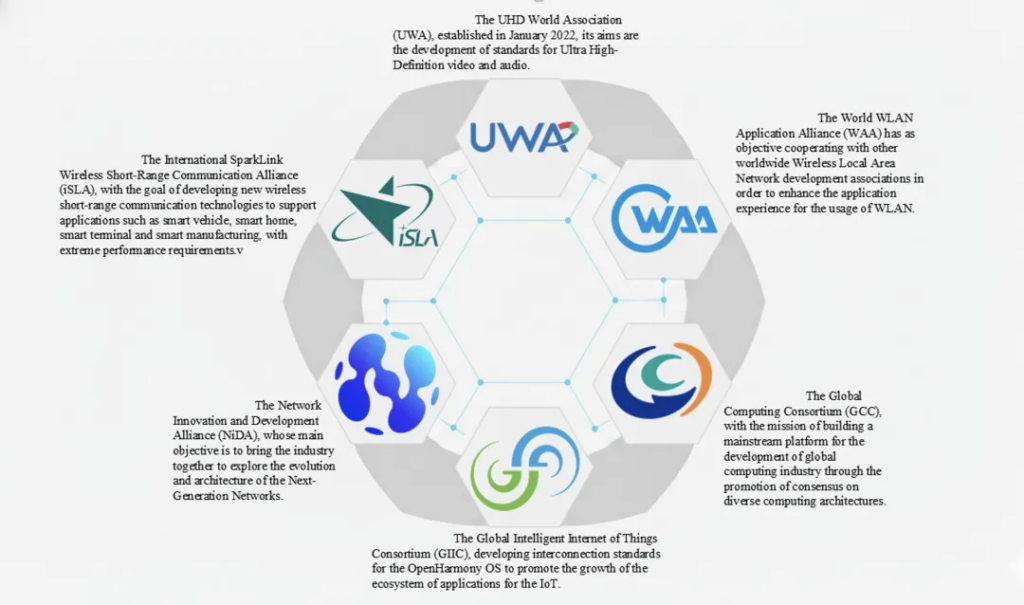
Fig. 4 Six Alliances locating in the HIOH
Because of their nature and their very focused scope, these Alliances do need to leverage their synergies in order to maximize their effectiveness and be able to concentrate on developing and delivering on their core business. Comentropy is the organization that brings all commonalities together under the same roof and provides professional services to the Alliances. It not only helps speed up the creation and registration of each of the Alliances but does also accompany them in their day-to-day business.
Through the expertise gathered within Comentropy, the Alliances get support for:
- Running all the operations of the Alliances’ working groups for the development of their activity
- Communication, promotion and visibility activities, fulfilling marketing related functions of the Alliance.
- Legal advice, for instance governance matters, contracts, IPR policies, etc.
- Financial and administrative matters, such as budget management, accounting, controlling and auditing, membership administration, etc.
- Running the HR processes and methodologies for the Alliances, following their requirements, e.g. HR policy, identification and recruitment of talent, training, etc.
- IT services that the Alliances may require in support of the activities above.
Besides, Comentropy does also provide strategic consultancy, aimed at advising the Alliances on their different activities and plans for development, as well as facilitating their relationship with other associations and institutions, both in China and abroad.
In summary, Comentropy is the platform providing the basic foundations for the Alliances to develop their core business in a cost-efficient manner. At the time of writing, Comentropy is servicing the six Alliances mentioned above; nevertheless, the ambition is for this platform to serve many more new Alliances as they set up and require our assistance.
PART.06About the Author
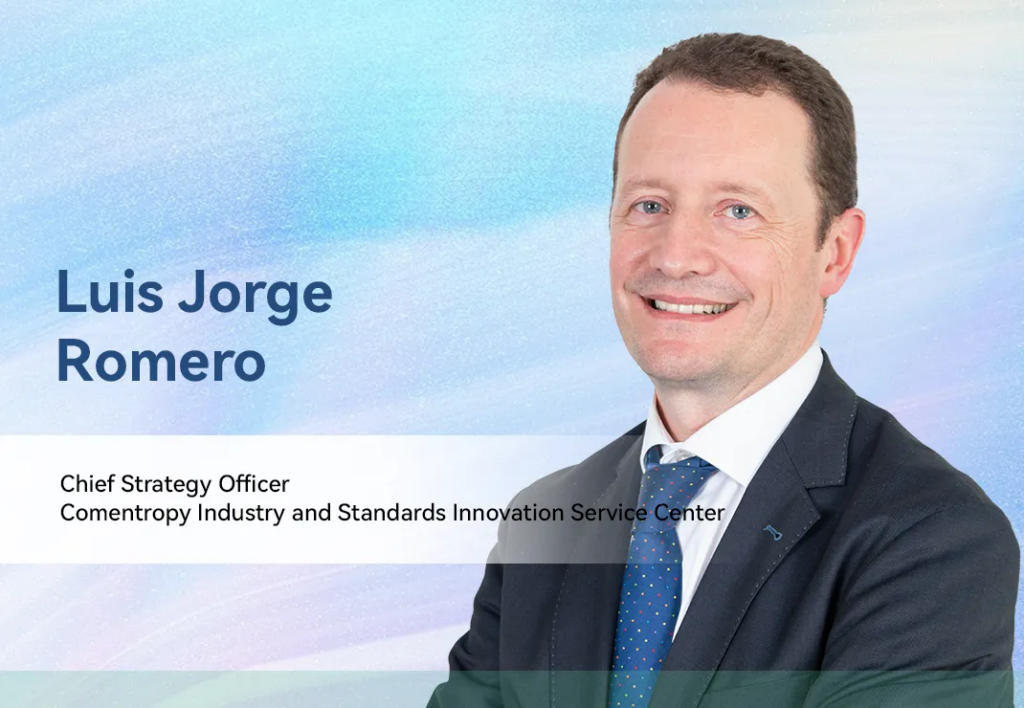
Luis Jorge Romero is the Chief Strategy Officer of the Comentropy Industry and Standards Innovation Service Center, post that he started in November 2024. Previously, he held the post of Director General of the European Telecommunications Standards Institute, where he dynamized the institute and spearheaded several innovative initiatives. Before joining ETSI, Luis Jorge held several management positions within the Telefónica Group of companies, mainly in Spain.